


2026-01-21
AI is no longer just a dialog box on a screen. From emotion-sensing companion robots to smart glasses with real-time translation capabilities, AI hardwareization has emerged as a key trend showcased at CES 2026. Yet, behind the AI hardware boom, the industry is urgently seeking an answer: when AI attempts to gain a physical form, what underlying architecture and interaction logic does it require?
On the evening of January 9, 2026, RiseLink, in partnership with Agora, hosted the Convo AI World Forum at The LOFT at Cabo Wabo Cantina in Las Vegas. The event, which attracted nearly 300 global tech elites, aimed to guide the direction of the surging AI hardware trend.
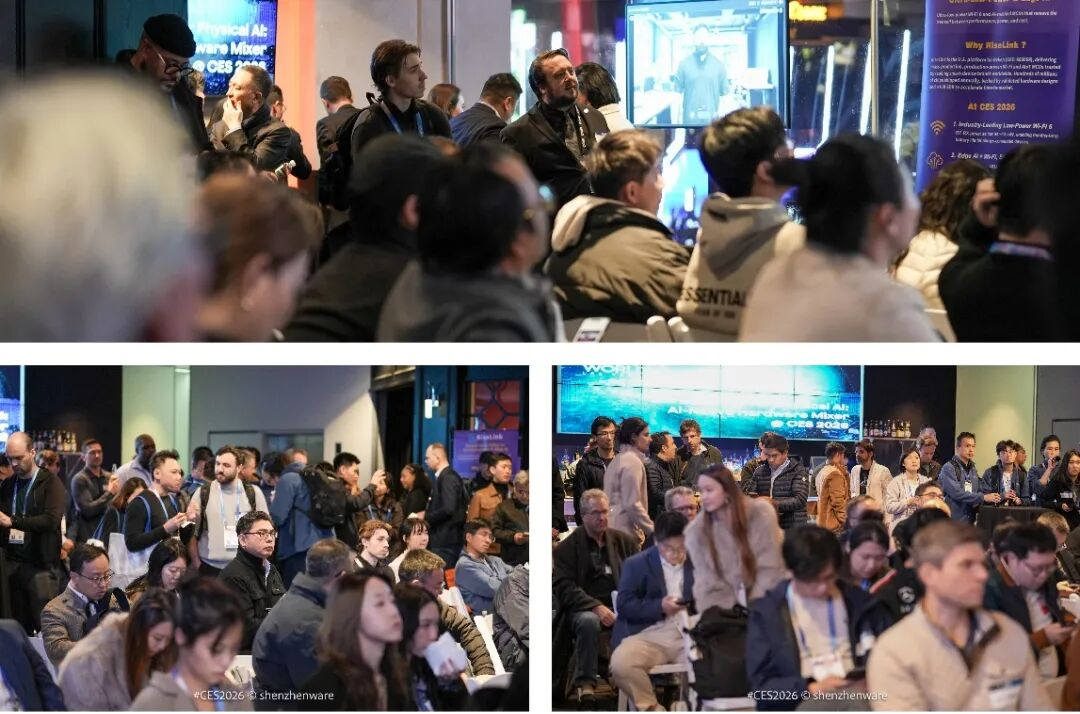
The two companies not only jointly launched the R2 All-Scenario AI Robot Development Kit based on the BK7259 chip, but also systematically proposed the Blueprint for Physical AI for the first time.
01 Blueprint for Embodied AI: From "Tool" to "Life Form"
Currently, the industry is in the early stage of evolving from text models and voice assistants to AI companions equipped with long-term memory, emotion understanding, and companionship capabilities. Physical AI is essentially the consumer-market implementation of Embodied AI. AI hardware is no longer a cold assembly of electronic components, but an emerging form of digital life. The Physical AI Blueprint, jointly proposed by RiseLink and Agora, seeks to provide an experience-centric design methodology for the next phase of Embodied AI development.
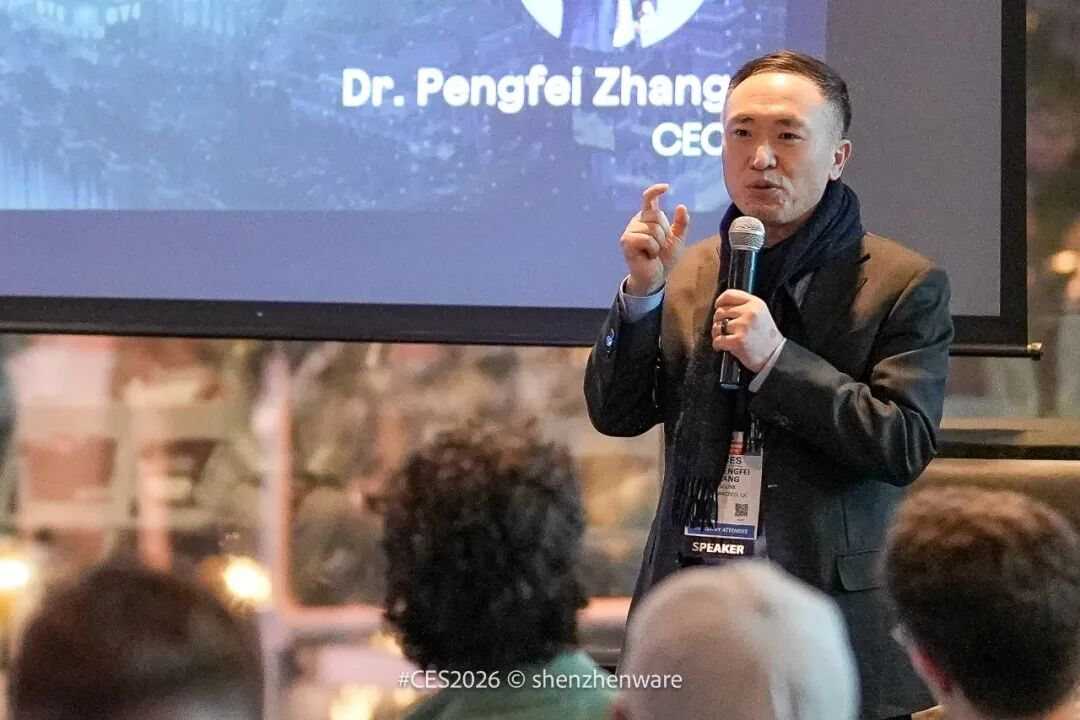
Dr. Pengfei Zhang, CEO of Beken Corporation and RiseLink, elaborated that competition in the Physical AI era has evolved into a race for collaborative efficiency. To become or remain a leader, deep collaboration with front-runners in respective fields is a prerequisite. RiseLink’s deep integration of communication, computing power, and power management, combined with Agora’s Real-Time Communication (RTC) capabilities, forms the core engine of Physical AI: low latency ensures natural interaction, while high energy efficiency supports long-duration always-on companionship.
Tony Wang, Co-founder and CRO of Agora, emphasized that the key to Physical AI does not lie in stacking hardware parameters, but in conversation experience—the ability to understand context, identify speakers, and perceive emotions in complex environments. In the future, AI’s core language will shift completely from one-way "commands" to two-way "conversations", and its business model will evolve from one-time hardware sales to long-term subscription-based services.

02 The Real AI Stack: Restructuring the Technical Underpinning
As AI crosses digital boundaries and transitions from cloud-based software to physical hardware, its underlying technical architecture should not be limited to "model + data + computing power", but must close the loop from atoms to bits. During the roundtable discussion, guests explored and reached a consensus on what constitutes the "real AI stack": an AI system’s usability hinges on a device’s ability to quickly understand context and make real-time responses through physical sensing.
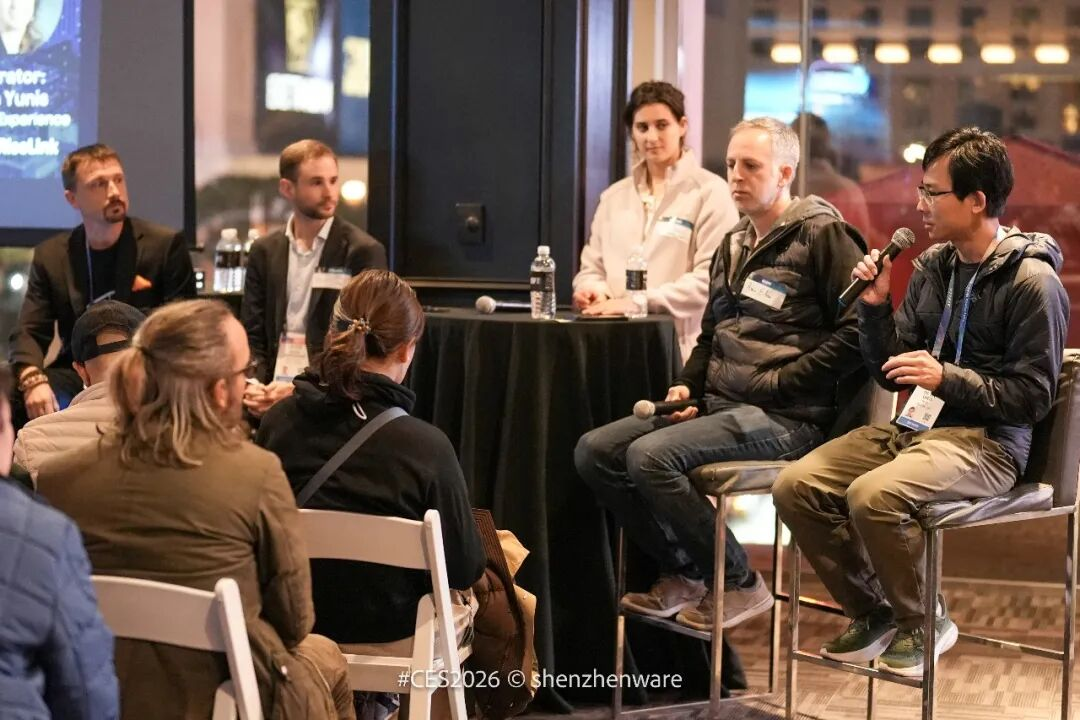
Roundtable Moderator: Dr. Rin Yunis, Head of Developer Experience at RiseLink (Center)
Roundtable Guests (From left to right):
• Max Fillin, CEO of WowCube
• Blake Margraff, Founder of Healthcare Technology
• Amir Eitan, CPO of Nanit
• Dr. Lin Chen, Chief Scientist of Wyze
In terms of architecture selection, the division of labor between Edge and Cloud is no longer an either-or choice, but a precise balance based on latency, privacy, and cost. Capabilities requiring real-time performance and privacy sensitivity are better suited for local processing, while functions needing continuous iteration and constrained by cost are more appropriate for cloud deployment. Engineering practices should start with validation, then gradually optimize edge-cloud allocation.
In consumer scenarios, cost is the hardest constraint. No matter how disruptive a technology sounds, without a sustainable Unit Economics model, products will never move beyond the laboratory to become viable long-term businesses.
Meanwhile, the guests reached an intuitive yet profound consensus: AI must possess stable memory and consistent behavior. An AI hardware device that is enthusiastic one day and forgetful the next can never truly establish user trust.
Building such trust is particularly delicate in highly private scenarios like home and healthcare. A brand’s genuine investment and clear value proposition are far more effective than listing a set of impeccable security technical terms. User acceptance of Physical AI often does not depend on the number of encryption protocols endorsed, but on extremely intuitive interaction experience: responses must be instant (low latency), processes must be transparent (explainable), and there must be clear human oversight (human-in-the-loop).
03 Application and Embodied Implementation: Explosive Scenarios for AI Hardware
The most exciting feature of Physical AI lies in its multimodal capabilities and rapid penetration across diverse scenarios.

• WOWcube (Left): Combines the classic 2x2 Rubik’s cube form factor with 24 high-resolution screens, enabling players to experience immersive games and applications in three-dimensional physical space through twisting, tilting, and tactile interaction.
• Wyze (Top Right): The new outdoor security camera features a sticker-mounted design for window installation, allowing outdoor recording from inside the room.
• Nanit Pro (Bottom Right): A full-featured baby monitoring system with added functionality to track a baby’s growth and development.
In the healthcare sector, the value of Physical AI lies in its ability to process complex physiological signals in real time and interact in a way that is understandable and acceptable to humans, thereby striking a balance between professionalism and approachability.
Blake Margraff, Founder of Healthcare Technology, pointed out that the implementation of AI in healthcare is by no means a simple automation process, but rather the achievement of automated patient monitoring and intervention.
Amir Eitan, CPO of Nanit, supplemented from the perspective of parenting and home monitoring that true trust stems from AI’s ability to provide explainable feedback in specific scenarios.
During the themed forum on AI companionship, guests discussed the practical implementation of AI companion products in child and family scenarios.
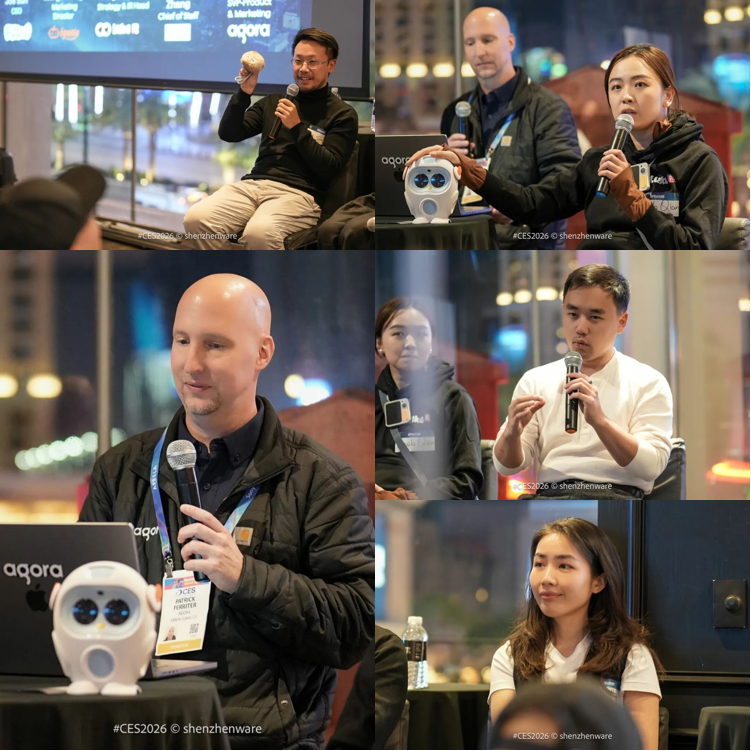
Roundtable Moderator: Patrick Ferriter, Senior Vice President of Product and Marketing at Agora (Bottom Left)
Roundtable Guests:
• Zhaozhi Sun, CEO of Robopoet (Top Left)
• Angela Qian, Head of Strategy at Ling Universe Luka AI (Top Right)
• Wayne Zhang, Chief of Staff at Dify (Middle Right)
• Margo Wang, Marketing Director of Lgenie (Bottom Right)
Stability and consistency are key factors influencing children’s acceptance of AI hardware. Any changes in story content, character settings, or interaction methods will significantly impact the user experience.
Low latency is a basic requirement for real-time companionship scenarios and the bottom line for establishing an emotional connection between users and products. Slow response times directly undermine the naturalness of interaction.
Long-term user retention poses a greater challenge. Attention should be paid to the difference between attracting users to try the product for the first time and retaining them over the long run. Long-term retention requires AI to develop stable interaction rhythms and emotional connections through continuous use, rather than just providing one-time responses.
In terms of safety and responsibility, a multi-layered protection approach is needed, including age-appropriate content, real-time intervention mechanisms, and clear disclosure and restriction of children’s privacy. As AI assumes the role of a companion, how to maintain intimate interaction while setting clear boundaries remains an ongoing challenge for the industry.
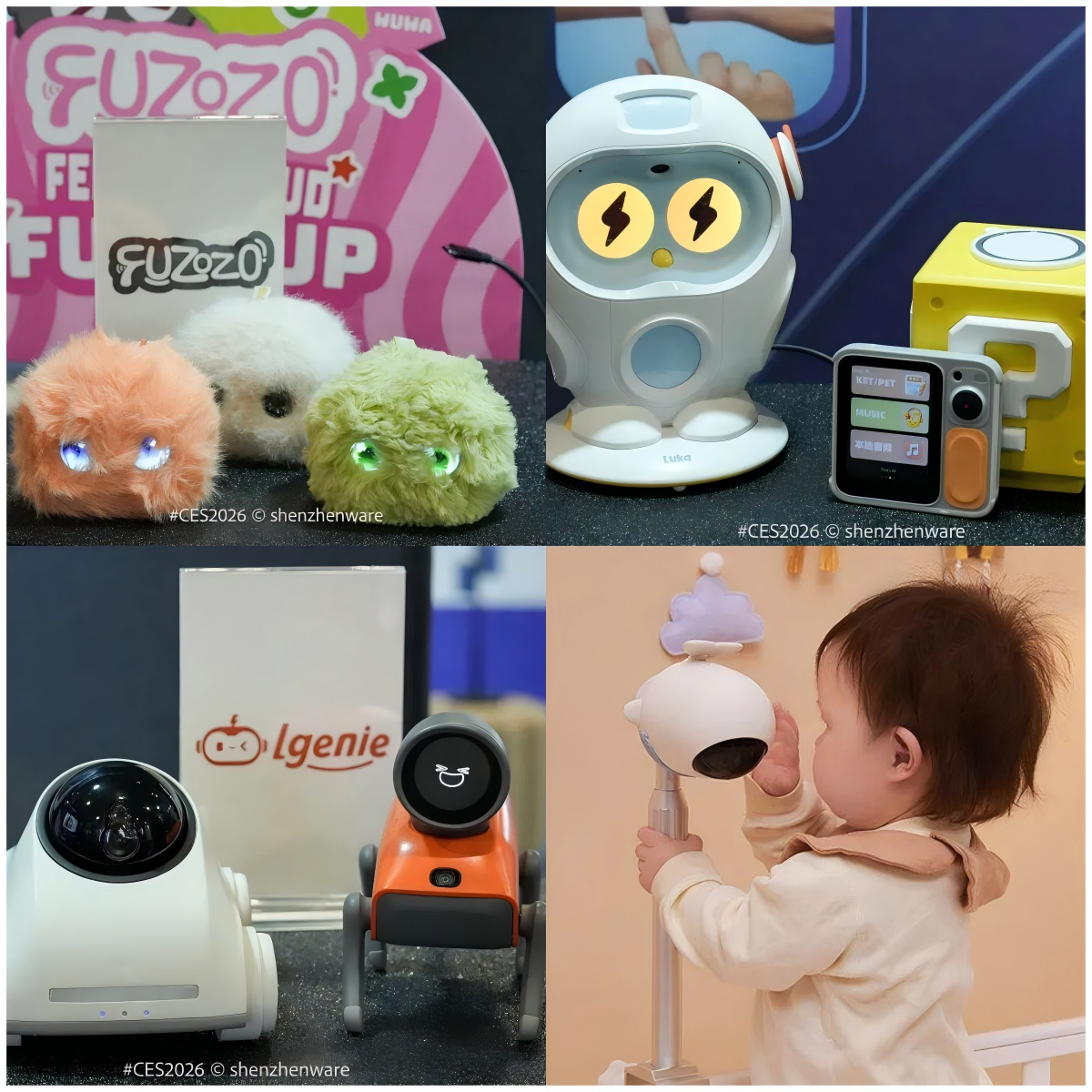
• Fuzozo (Top Left): An AI nurturing trendy toy targeting Generation Z
• Luka AI Cube (Top Right): Ling Universe Cube, an AI learning companion for children
• Lgenie (Bottom Left): Xiaojiang Pet Companion Car & Quadruped Desktop Robot
• Hippo Daddy (Bottom Right): AI Smart Baby Monitor
During the product demonstration session, Dr. Diana Zhu, Head of RiseLink, hosted the launch of the ChooChoo AI Educational Robot. She mentioned that ChooChoo’s ability to deliver smooth visual and motion feedback stems from its integration of RiseLink’s highly integrated System-on-Chip (SoC) solution. This chip integrates Wi-Fi connectivity, audio-visual processing, and AI acceleration engine on a single chip, enabling developers to bypass complex underlying hardware optimization and directly achieve "vision-language-action" coordination—previously requiring high-performance servers—through simple API calls on the R2 Kit.
As the first educational robot jointly powered by RiseLink’s chip and Agora’s conversational AI engine, ChooChoo not only understands children’s questions, but also "sees" the surrounding environment and children’s movements through visual sensors and make corresponding physical responses.
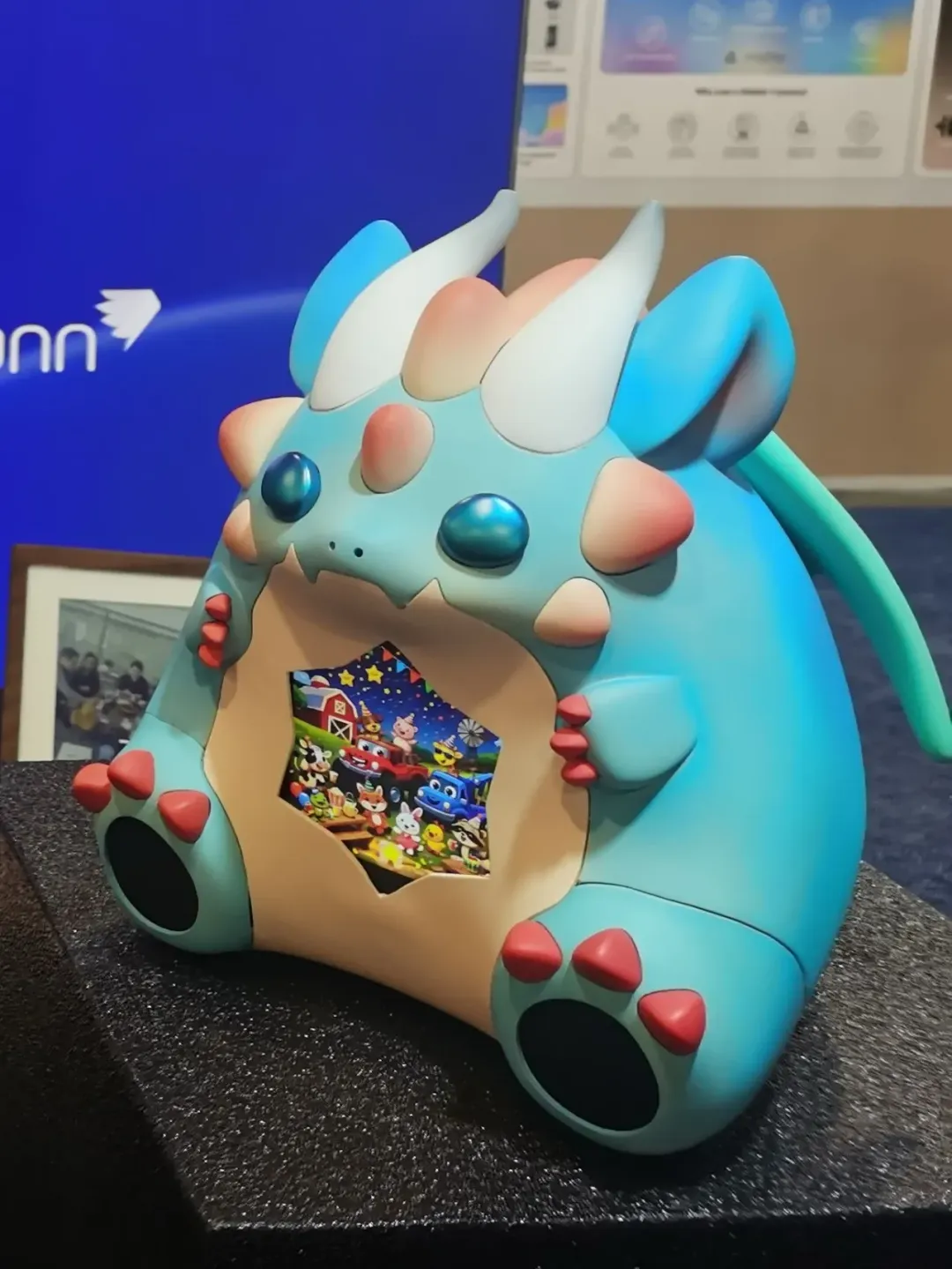
As a benchmark case of the R2 All-Scenario AI Robot Development Kit, Lukaka, a desktop robot under LuwuDynamics, also made its debut. On site, Lukaka demonstrated how to achieve high-frequency, low-latency AI interaction in a compact form factor.
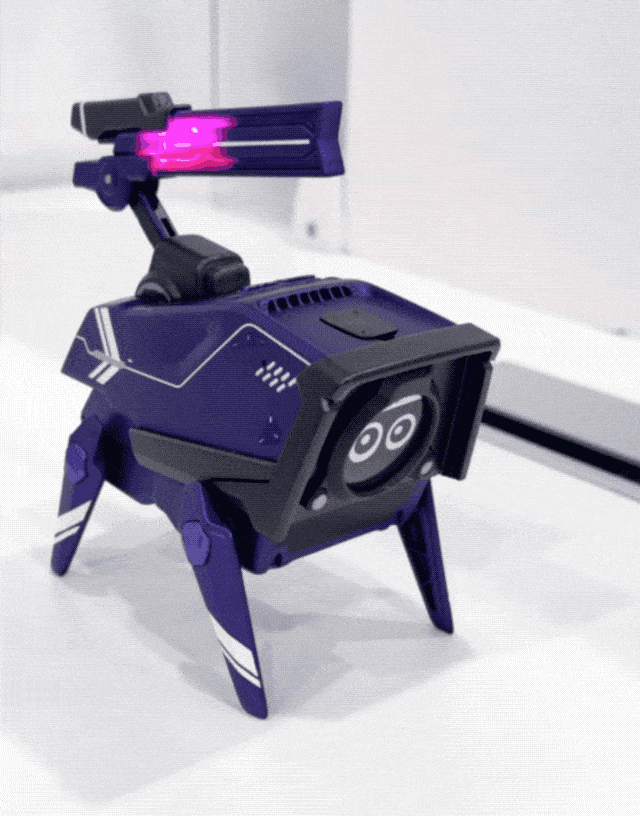
Through these two highly representative Embodied AI products, we see that when AI is equipped with a powerful "brain" (large model) and a sensitive "body", the boundaries of interaction have been completely broken. The launch of these two products jointly defines a new benchmark for AI hardware and marks the full maturity of the AI solution co-developed by RiseLink and Agora.
In the lightning talk session, Joey Jiang, Vice President of Sales at Seeed Studio, shared the shortest path to building AI native hardware, emphasizing the significance of modular hardware for rapid concept implementation. He pointed out that the development of AI native hardware should no longer follow the old logic of "building from scratch". By plugging Seeed Studio’s modular sensing nodes—sensors, vision kits, etc.—straight into the RiseLink platform, hardware-prototype validation shrinks from months to weeks. This “building-block” workflow is the fastest way for startups to hit the market window in the Physical AI wave.
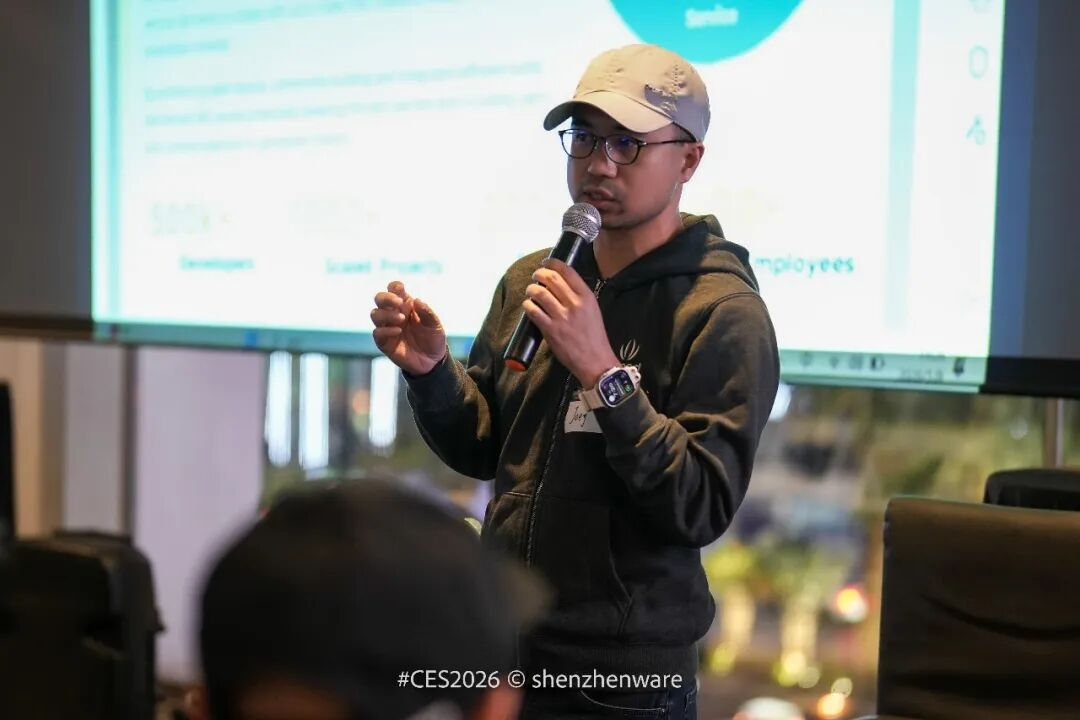
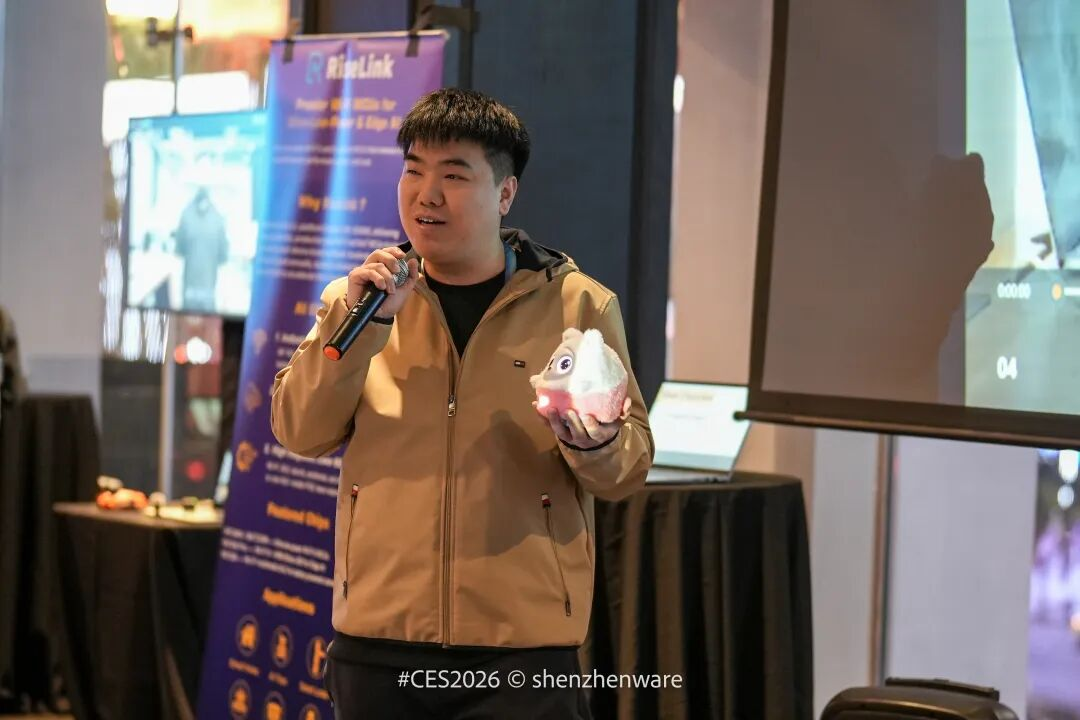
Kim Jin, Product Manager of Pophie, shared the story behind the development of the Robie AI Robot. Behind the R&D process, the team invested significant effort in deeply understanding user intent. Through multimodal perception, the robot acutely captures emotional information behind vision, touch, and voice, delivering human-like responses. This kind of interaction is not just command execution, but enables the robot to generate genuine "emotional resonance" based on precise insight into user intent. This marks Physical AI’s true evolution beyond a tool, transforming into an emotional companion that understands the user’s soul.
04 Privacy, Authorization and Trust: The Bottom Line of Ambient AI
As Ambient AI moves toward "always-on", privacy and trust are no longer just compliance issues, but an integral part of product experience. What users truly worry about is not model errors, but the device’s collection and use of data "without being noticed".
During the roundtable discussion themed "When AI Is Everywhere: Redefining Data Privacy, Consent, and Trust", guests reached a clear consensus on privacy practices: deliver on promises and make actions visible.
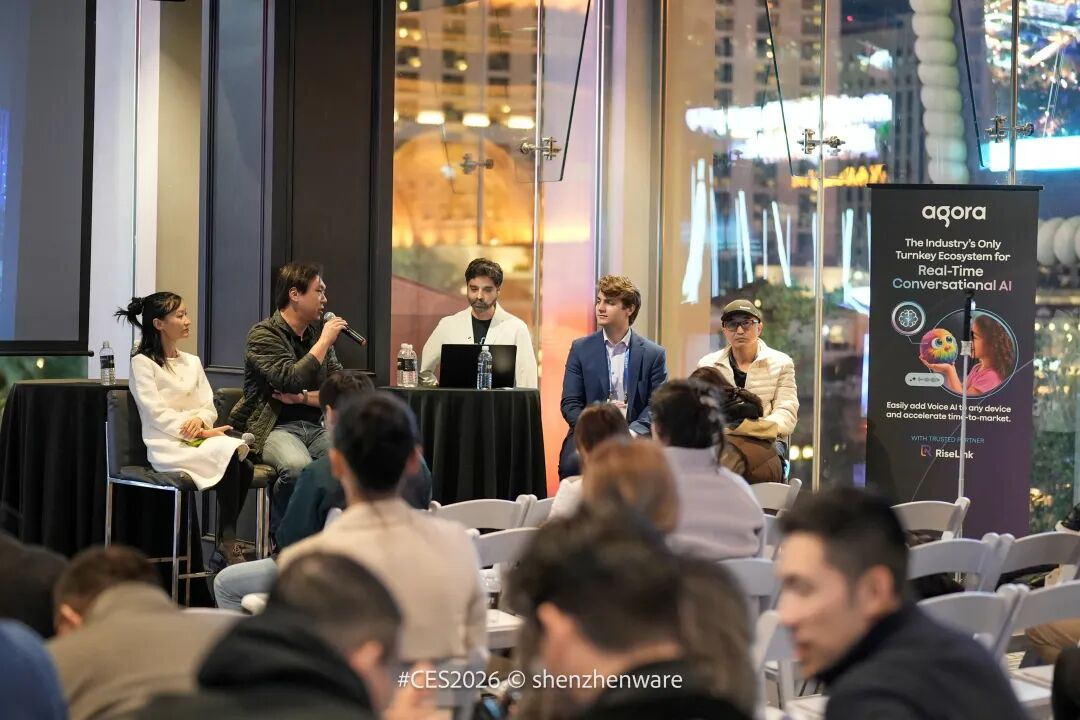
Roundtable Moderator: Ramana Kapavarapu, Chief Information Security Officer (CISO) & Head of IT Operations at Agora (Center)
Roundtable Guests (From left to right):
• Dr. Diana Zhu, Head of RiseLink
• Joe Tham, Co-founder of Ellie Hippo Daddy
• Gibran Mourani, Global Account Manager at MiniMax
• Zheng Bu, Co-founder & CEO of Kaamel AI
Transparency: Instead of lengthy privacy policies, products should clearly demonstrate at the interaction level whether the system is listening, what data is being collected, and how users can exercise real-time control over these activities. Transparency is reflected in hardware indicators, software status, and user workflows—for example, using physical indicator lights to intuitively inform users if the system is in a listening state.
Edge Protection: Minimizing data transmission through Edge Computing and keeping raw voice and visual data local is the most effective path to privacy protection. For most scenarios, processing data locally without uploading it to the cloud and only transmitting necessary signals not only helps protect privacy, but also reduces the system’s attack surface.
Response Mechanism: When it comes to security incident response, a mature, structured mechanism is required rather than ad-hoc decision-making. Rapid isolation, clear impact assessment, timely remediation, and post-incident review and improvement are more important than short-term business considerations. Past large-scale data breach cases have repeatedly proven that delays or evasion will only amplify long-term losses.
Truly scalable trust stems from the consistent design of hardware and software, as well as real-time verifiable control capabilities. Certifications and compliance are the foundation, but only when system behavior is consistently aligned with commitments can users develop long-term acceptance of "ubiquitous AI".
05 Embodied AI Is Irresistible!
Looking back at the entire event, we can understand the profound transformation brought by Physical AI from three dimensions:
• Technical Essence: From "Attachment" to "Embodiment". AI is no longer an external function attached to hardware, but is deeply integrated into the hardware’s "nervous system" through dedicated chips and real-time communication protocols.
• Interaction Paradigm: From "Command" to "Symbiosis". When AI can grasp context, sense emotion, and retain long-term memory, it evolves from a "useful tool" to a "species that understands you". Conversation is no longer a means to an end, but the very form of its existence.
• Commercial Essence: From "One-Time Purchase" to "Subscription". The core value of Physical AI lies in its ability to continuously evolve over time. Manufacturers are no longer selling components, but long-term services and emotional companionship.
With the endorsement of RiseLink, Agora, and dozens of representatives and top experts from AI hardware and software companies spanning artificial intelligence, chips and hardware, AI algorithms, digital health, home security, AI companionship, and education, AI will break out of the purely digital world and truly gain a physical form in the physical world.
SOURCE: shenzhenware
 Contact Us
info@bekencorp.com
 Resume delivery
hr@bekencorp.com

Beken Corporation · 沪ICP备07004607号 BY VTHINK
WeChat
 BACK
BACK PER
PER